The 2:00 AM Search: How to Solve Your Customer's Biggest Stress
It's 2:47 AM, and Sarah has been scrolling for twenty minutes, typing and deleting, typing and deleting. Finally, she types: "Why does my small business keep losing customers?"
No corporate speak. No industry buzzwords. Just a raw question from someone who can't sleep because her dream is slipping away.
This is what I call the 2:00 AM Search, and if you understand it, you understand the future of marketing.
Before we dive in: This strategy only works if your presence is actually felt. If you feel like your expertise isn't reaching the right people, check out our guide on The 'Ghost' Expert: Why You're Invisible in the Social Search Era to fix your visibility first.
When People Search for Solutions, Not Slogans
Here's what most brands miss: your customer isn't looking for you at 2:00 AM. They're looking for someone who gets it. Someone who has felt the same pit in their stomach. Someone who can explain why everything feels so hard right now.
They're not typing "enterprise-level customer retention solutions." They're typing things like:
- "How do I tell my team we're not hitting targets again?"
- "Why does my manager make me feel invisible?"
- "Am I too old to start over?"
These searches are messy. Emotional. Specific. And they represent the highest-intent traffic you'll ever see because when someone searches at 2:00 AM, they're not browsing. They're desperate for an answer. This shift is why Social Search is the New Traffic; it's about meeting them in that moment of need.
The question is: will you be there?
The Search Landscape Just Flipped Upside Down
Let me tell you about Marcus. He runs a mid-sized event venue in Austin. Last year, he spent $15,000 on Google Ads targeting "corporate event spaces Austin." Got plenty of clicks. Almost no bookings.
Then his daughter convinced him to try something different. She filmed a 47-second TikTok showing the venue's terrible acoustics problem, which they'd just fixed, complete with a before-and-after sound test. The caption? "If you've ever been to an event where you couldn't hear the toast, this is why."
That video got 340,000 views. More importantly, it generated 23 qualified leads in two weeks. People who had experienced that exact problem wanted to make sure it didn't happen at their event.
What changed? Marcus stopped trying to rank for keywords and started answering the questions his customers were actually asking.
Yes, Google Now Pulls from TikTok
If you're wondering whether TikTok content shows up in Google search results, yes, it absolutely does. Google indexes TikTok videos directly, especially in mobile search and the "Video" tab. When someone searches for how to solve a real-world problem, Google's algorithm has started favoring TikTok content because it provides something a blog post often can't: immediate visual proof from a real human.
But here's the trick most people miss: Google can't watch your video. It reads the text. The captions. The on-screen overlays. So if your TikTok is about "handling a difficult boss," those exact words need to appear as text within the first three seconds. Otherwise, you're invisible to the algorithm even if your content is brilliant.
The New Big Three: Google, YouTube, and TikTok
The search hierarchy has fundamentally shifted. As of 2026, if you want to own the high-intent query space, you need to show up on all three major platforms:
- Google - Still the king for data-heavy, comparison-based searches
- YouTube - The go-to for detailed tutorials and long-form explanations
- TikTok - The new default for "life problems" and peer-reviewed recommendations
Think about your own behavior. When you need to fix your dishwasher, you probably search YouTube. When you want to know if a restaurant is actually good, you check TikTok for the brutally honest reviews. When you need statistics for a presentation, you use Google.
Your customers do the same thing. Which means you can't just optimize for one platform anymore. You need what I call a "Multi-Node Strategy," taking one piece of deep content and adapting it for all three environments.
Here's how it works: You write a comprehensive blog post about solving a client problem. Then you extract the most visual 60 seconds for TikTok (quick discovery). You turn the key insights into a LinkedIn carousel (professional authority). You create a 5-minute YouTube version for people who want the full story. Same core message, three different discovery points.
Why TikTok Search Is Different (and Why That Matters)
Traditional search gives you information. Social search gives you context.
When Sarah searches "why is my business failing" on Google, she gets 10 blue links to articles. Helpful, maybe. But impersonal.
When she searches the same thing on TikTok, she sees someone standing in their empty store at 6 AM, coffee in hand, explaining the exact moment they realized they needed to pivot. The top comment says, "I'm literally crying because I'm going through this right now." Fifteen replies offer specific advice.
That's the difference. TikTok doesn't just give answers, it gives proof that you're not alone. It provides social validation at the exact moment you're feeling most isolated.
And the algorithm learns faster. Google tracks your searches over weeks to understand your intent. TikTok watches how long you watch videos, what you rewatch, which creators you save, and adjusts in real-time. Within an hour of searching about business struggles, TikTok knows exactly what flavor of business stress you're dealing with.
Show the Work, Not Just the Advice
Here's where most businesses fumble the TikTok opportunity. They treat it like a billboard. They talk to people instead of showing with them.
If someone asks about your event space, don't just say "we have great lighting." Show a time-lapse of the room transforming from harsh fluorescents to warm romantic lighting for a wedding. If you're a consultant talking about productivity systems, don't just list tips; screen-record yourself actually organizing your own chaotic inbox in real-time.
This visual "proof of work" builds trust in 15 seconds. That's why I call social search optimization the real Google competitor. It's not about outranking Google; it's about providing a different, often better answer to the same question.
From Keywords to Entities: How the Algorithm Actually Sees You
Professional content strategy has fundamentally changed in the past year. We're moving away from "keyword stuffing" and toward what's called entity recognition.
The algorithm doesn't just want to know if you mentioned "marketing" seventeen times. It wants to know if you're an authority on marketing. It determines that through clusters of related concepts, consistent content depth, and audience behavior.
Let me make this practical. If you're a career coach, the algorithm isn't just looking for the word "resume." It's looking for whether you consistently discuss interview preparation, salary negotiation, LinkedIn optimization, job market trends, and career transitions. That cluster of expertise marks you as a searchable entity, someone worth showing when people ask career questions.
This is why posting randomly about whatever pops into your head doesn't work anymore. The algorithm needs to understand what you're actually about. You need to become less of a generic profile and more of a "go-to source" for specific problems.
Matching Vulnerability, Not Just Keywords
Traditional SEO matches words. Social SEO matches feelings.
If your ideal customer is typing "I'm terrified of my upcoming presentation," your content shouldn't be a sterile listicle called "10 Public Speaking Tips." That's what everyone else is doing, and it's why everyone else is invisible.
Instead, try this: "I used to sweat through my shirt before every meeting. My hands would shake so badly I couldn't hold my notes. Here's the weird thing that finally stopped the panic."
See the difference? You're not just addressing the problem, you're revealing that you've lived it. You're using the same language your customer uses in their head at 2:00 AM. That emotional resonance is what makes someone stop scrolling.
The algorithm rewards this too. TikTok measures something called "watch time completion." If people watch your entire 60-second video, that signals value. But most people click away within 3 seconds if they don't immediately feel seen. Starting with vulnerability, with the admission that you struggled too, hooks people emotionally.
This works across all platforms, by the way. The YouTube video that starts with "I lost $40,000 before I figured this out" will always outperform the one that starts with "Today I'll teach you about investment strategies."
The Three Mistakes Killing Your Search Visibility
I review a lot of content strategies, and I see the same patterns destroying potentially great brands:
Mistake #1: Using Jargon When You Should Be Using Pain Points
If your website talks about "B2B scalable solutions" but your customer is searching "how to fix a broken workflow," you will never be found. Period.
I worked with a software company that described their product as "an enterprise-grade agile project management suite." Technically accurate. Completely useless for search.
We rewrote their content around phrases like "why do my projects always run late" and "how to stop endless status meetings." Their organic traffic tripled in two months because we started matching the real questions people asked.
Mistake #2: Treating Captions Like Afterthoughts
Your TikTok caption isn't just a place to be cute. It's your new meta description. It's how the algorithm knows what your content is about.
If you post a video about fixing cash flow problems but your caption says "Monday motivation #entrepreneur," you've just made yourself invisible to everyone actually searching for cash flow help. The keywords need to be in the caption, clearly and specifically.
Same with YouTube descriptions, Instagram alt text, and LinkedIn post copy. These aren't decorative elements; they're how search algorithms index you.
Mistake #3: No Bridge from Viewer to Lead
Getting views is meaningless if you don't capture the relationship.
I see this constantly: a business gets 100,000 views on a TikTok, celebrates, and then... nothing. No email list growth. No DM conversations. No sales.
Why? Because they didn't give people a next step.
Your social content needs a conversion loop. That might be:
- "Link in bio for the full checklist."
- "DM me the word 'WORKFLOW' for the template."
- "Free training this Thursday, link to register below."
The goal isn't to go viral. The goal is to turn that 2:00 AM searcher into someone you can actually help, and that requires moving them from anonymous viewer to email subscriber or community member.
This matters even more now because of privacy regulations. Third-party data is dying. The only sustainable growth comes from first-party relationships with people who willingly give you their email because they trust you.
Becoming the Only Answer They Need
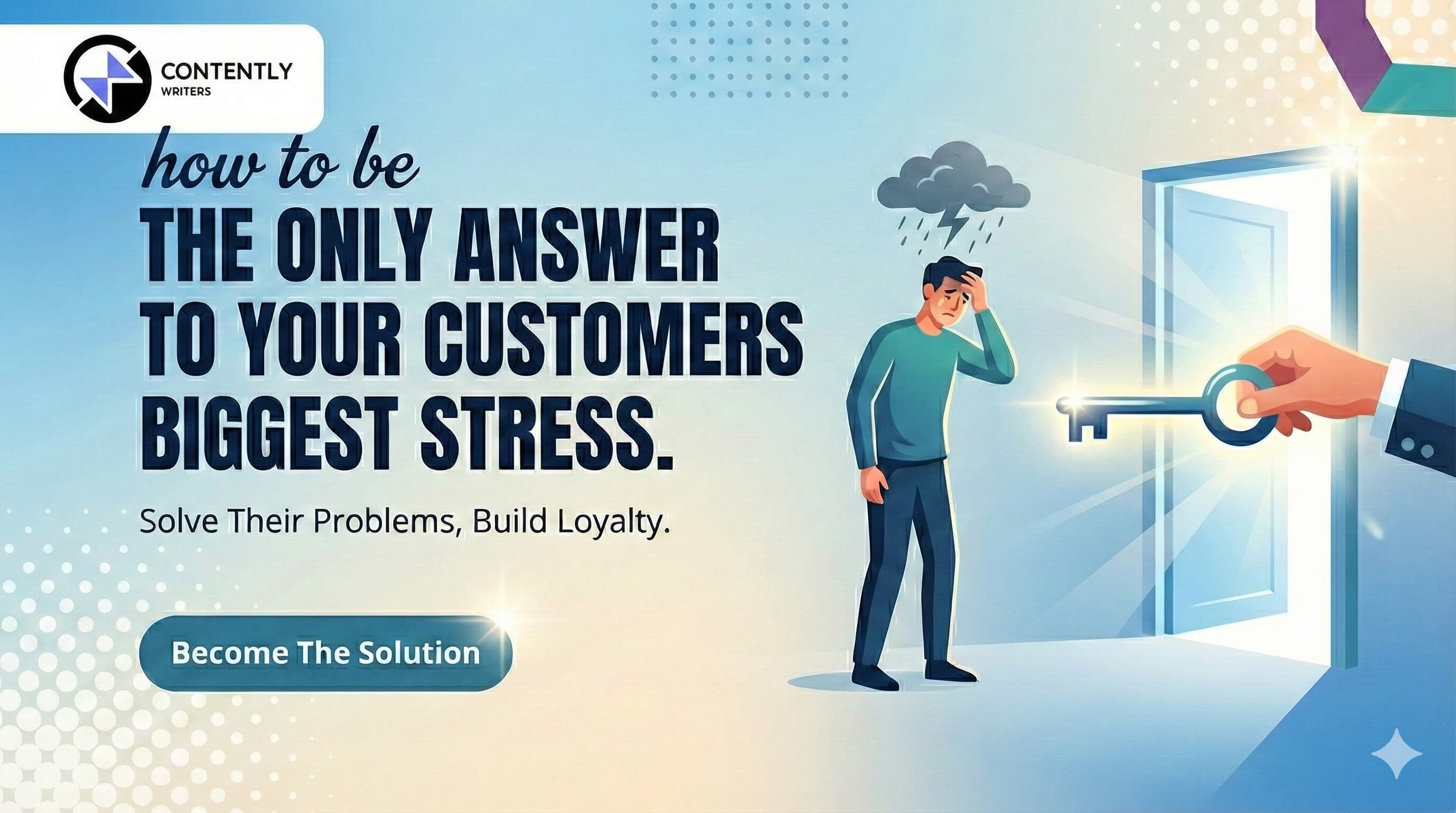
Here's what I want you to remember: The person who describes the problem best is the person the customer trusts to solve it.
Not the person with the fanciest website. Not the person with the biggest ad budget. The person who makes them feel understood.
Sarah, sitting in her dark kitchen at 2:47 AM, doesn't need another article about "customer retention metrics." She needs someone who can say: "I know exactly why you're awake right now. I know what it feels like to watch something you built with your own hands start to crumble. And I can tell you exactly what saved my business when I was where you are."
That's the 2:00 AM search. That's the opportunity.
Whether you're booking event spaces, selling software, offering consulting, or building any other business, the rule is the same. Be the voice that answers the stress. Be specific about the pain. Show that you've been there too.
Because when you do that, you don't just get a click. You earn trust. And trust is the only thing that still converts in 2026.
Ready to turn your expertise into content that actually gets found? If you're tired of creating content that disappears into the void, tired of watching competitors with worse solutions somehow get all the attention, maybe it's time for a different approach. One that understands how people actually search when they're desperate for answers.
We specialize in content strategy that bridges the gap between what you know and what your customers are frantically typing at midnight. Not just blog posts. Not just social content. As the best content writing company for high-intent growth, we build a complete ecosystem designed to make you the obvious answer.
Book a free strategy call, and let's map out exactly where you should show up in your customer's moment of need. Because the best time to start was yesterday. The second-best time is right now before your competitor figures this out.